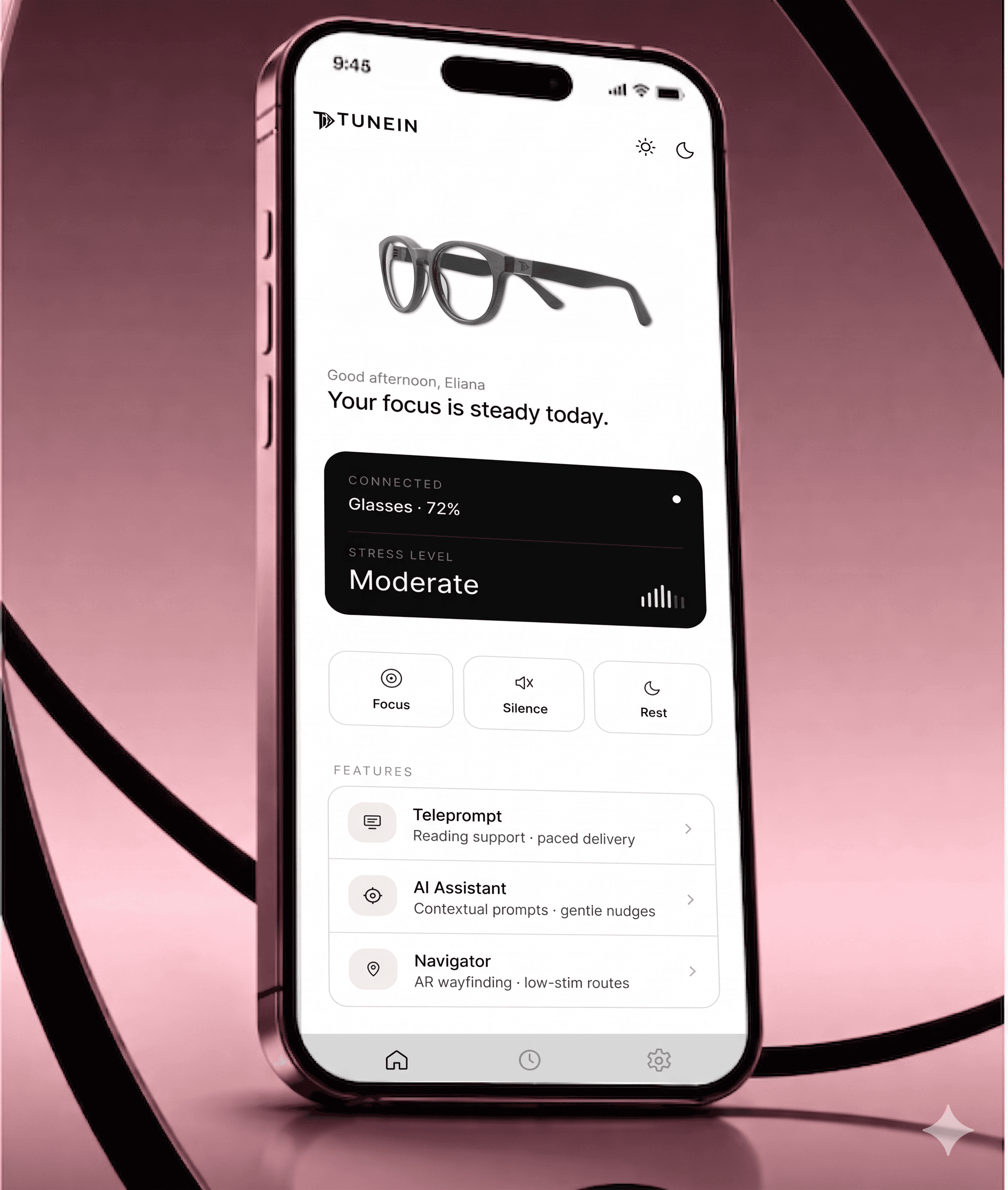


Product Design • UX/UI • AR Technology
TuneIn The Future of Vision for ADHD
I design AI-powered experiences that help neurodivergent users solve cognitive overload
Project Overview
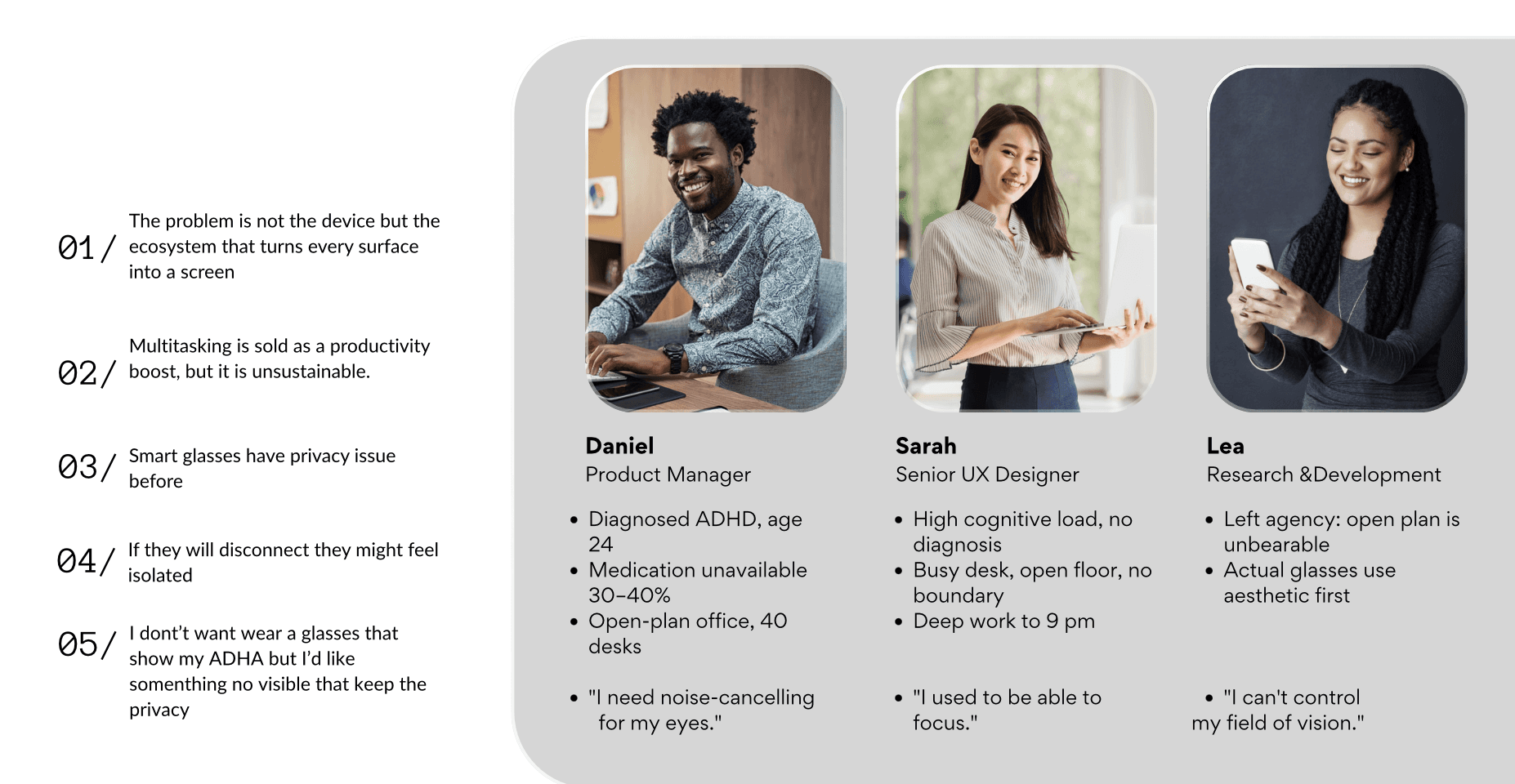
1.9 million adults in the UK live with ADHD. Millions more experience sensory overload every day on commutes, in open-plan offices, in crowded streets.
TuneIn is a pair of wearable smart glasses with electrochromic polymer lenses that provide real-time sensory filtering, helping users manage visual and auditory overstimulation without requiring manual intervention.
The solution that requires the user to act in the moment of overload has already failed.
Key Metrics
22
Working days lost per year to sensory overload-related impairment
75%
Of adults with ADHD are undiagnosed and managing alone
60%
Have been fired or left a job because of sensory environment
Research & Insights
Neurodivergent users and professionals working in high-stimulation environments (cities, offices, commuting).
User Interviews → explored real experiences of distraction, focus loss, and coping strategies
Survey (n=18) → identified patterns in how often users feel overwhelmed in cities and workspaces
Desk Research → analysed existing solutions (e.g. noise cancelling, focus modes) and gaps in the market
FEATURE 02
AI Silence: Visual & Audio Cancellation
Visual Cancellation: AI Silence softens brightness, tones down intense colours, and smooths out distracting movement in your field of view. The world doesn't disappear; it just becomes easier to look at.
Sound Reduction: The AI listens to the environment and reduces unnecessary ambient noise. Instead of blocking all sound, it lowers background distractions while keeping important sounds clear.
Brain-Sensing Focus Mode (EEG)
Small EEG sensors built into the frames detect brainwave signals that show when you're losing focus or becoming overstimulated.
When the AI detects brainwave activity has moved away from a calm, focused state, it activates automatically, with no user input needed.

The Problem
How might I empower people with ADHD to navigate a world not designed for them by transforming overwhelming environments into manageable, calm experiences?
GAP IN THE TECHNOLOGY MARKET
Existing smart glasses prioritise augmentation for neurotypical users. No wearable on the market combines EEG-based focus detection, sensory filtering, and AR navigation for neurodivergent professionals. TuneIn identifies and addresses that gap.
GAP IN THE SMART GLASSES MARKET
Current smart glasses are built for productivity and entertainment. None of them is designed to support neurodivergent people in sensory-heavy environments. TuneIn fills that gap.
The SOLUTION
TuneIn is an AI-powered smart glasses system that filters visual and audio stimuli in real time.
Core Features
Focus Mode
Reduces visual intensity from screens, artificial lighting, and distracting elements to minimise visual overloadAI Silence
Filters background noise while preserving important sounds such as voices or alertsAI Assistant
Supports cognitive tasks by breaking down actions, summarising information, and guiding the userSmart Navigation
Helps users avoid overstimulating environments and choose calmer routes
Core Features
FEATURE 01
Focus Mode: The Filter That Works When You Can't
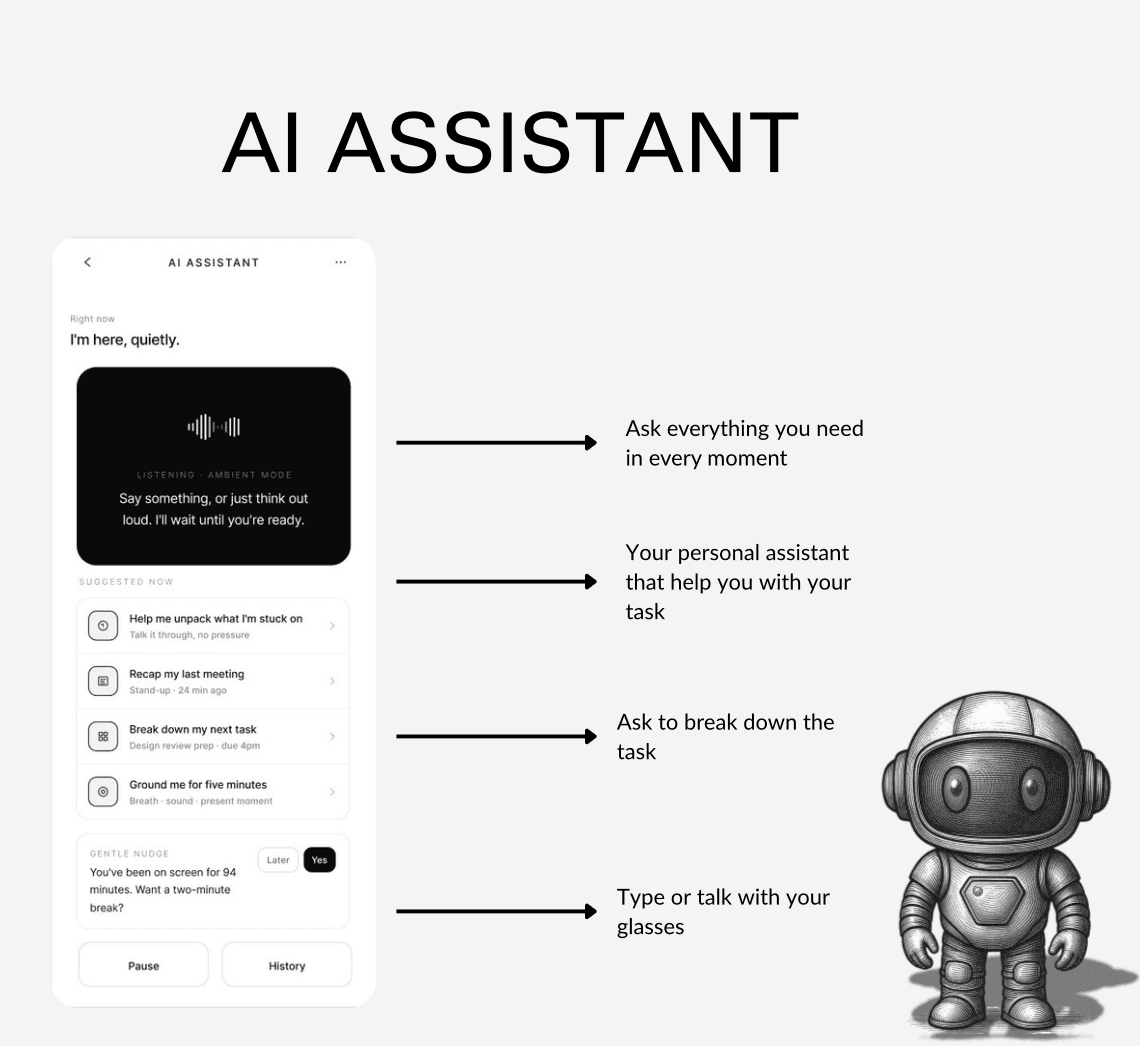
After researching AI interfaces used in other products, I decided to redesign the AI assistant page completely. I prioritised the AI’s supportive role, gently suggesting when it might be a good moment to engage, without any pressure, only if you feel ready.
The “Suggested for you” section can include features like a recap of your last meeting or a “break down my next task” feature, where the AI simplifies and breaks down your tasks into manageable steps to make your workflow easier.
No button. No app interaction. No decision required.
How it activates
Sensor Fusion
All four inputs must exceed the threshold simultaneously and hold for 4+ seconds. Single stimuli don't trigger it; sustained overload does.
What stays clear
Central Vision Untouched
Only the peripheral zone is affected. Your reading, screen, and direct line of sight remain at full transparency.



FEATURE 04
Smart Map: Real-Time AR Navigation
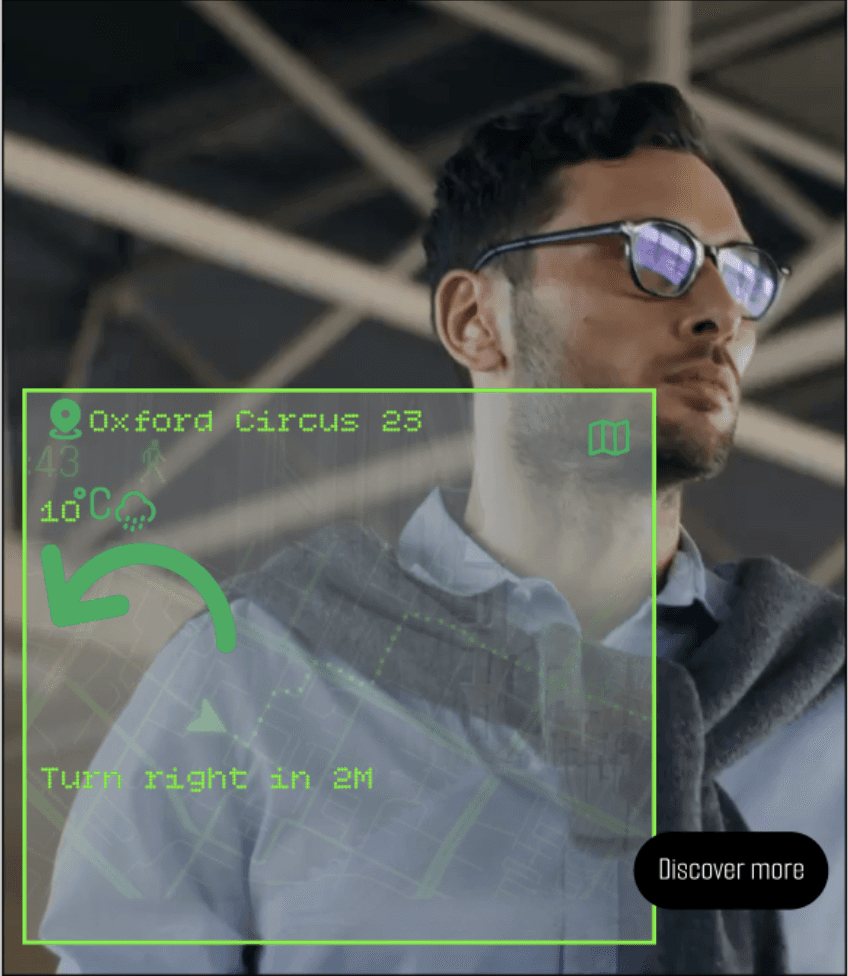
In the Smart Map section, I wanted to introduce something that no one else currently offers. Instead of the usual suggestions like cafés, bars, or restaurants, I focused on something truly meaningful to support people with ADHD.
Especially during peak moments of ADHD, people may feel overwhelmed and don’t necessarily want to end up in crowded places. You can already use Google Maps for that. What they really need is to understand which routes are less busy and more calming.
Similar to how Waze alerts you about traffic, accidents, or road disruptions, this feature would guide users toward quieter, less stimulating paths to help them stay focused and comfortable.

Avoid busy street: like wize but for Human

FEATURE 03
Teleprompted
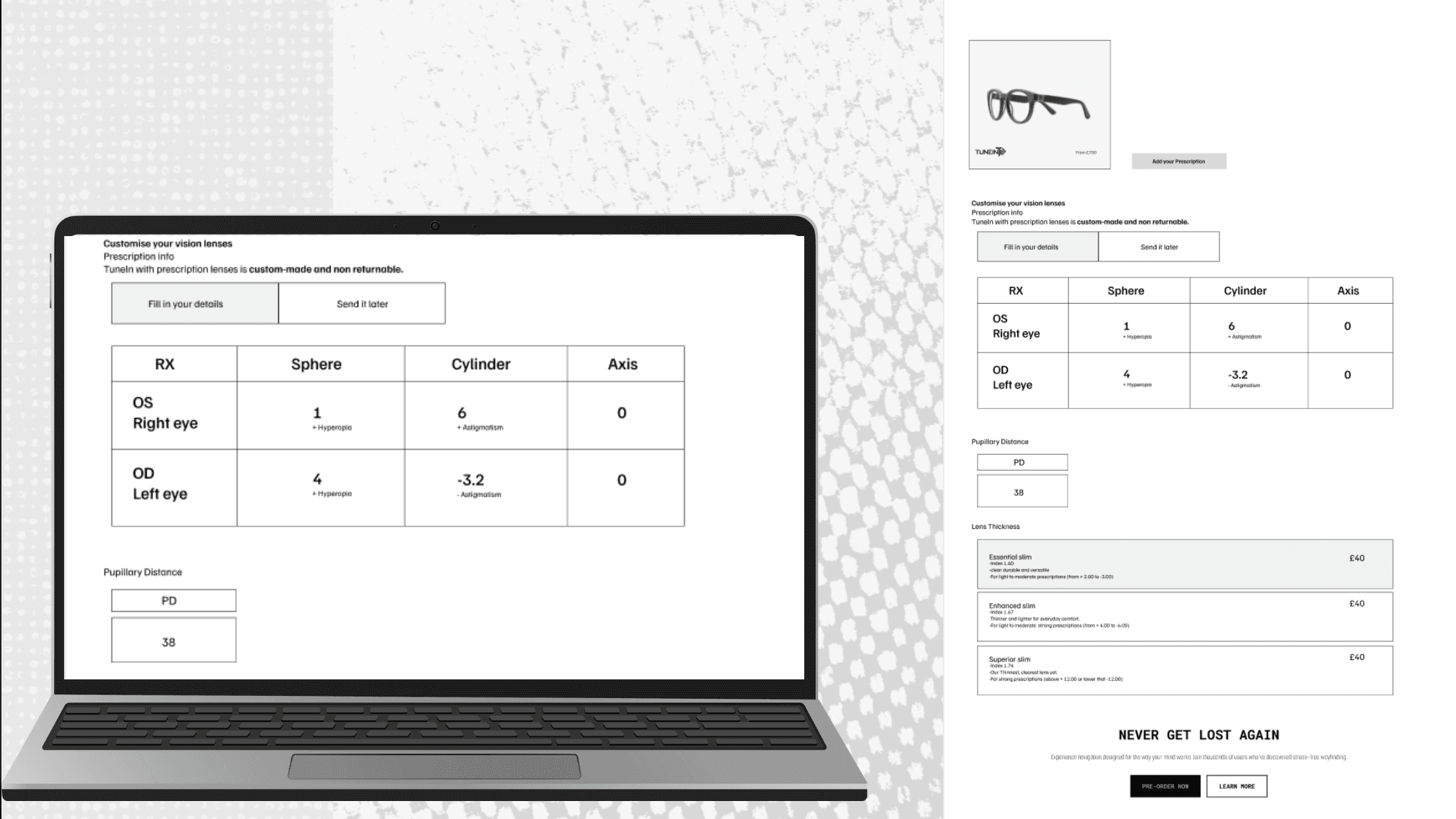
Customise your prescription
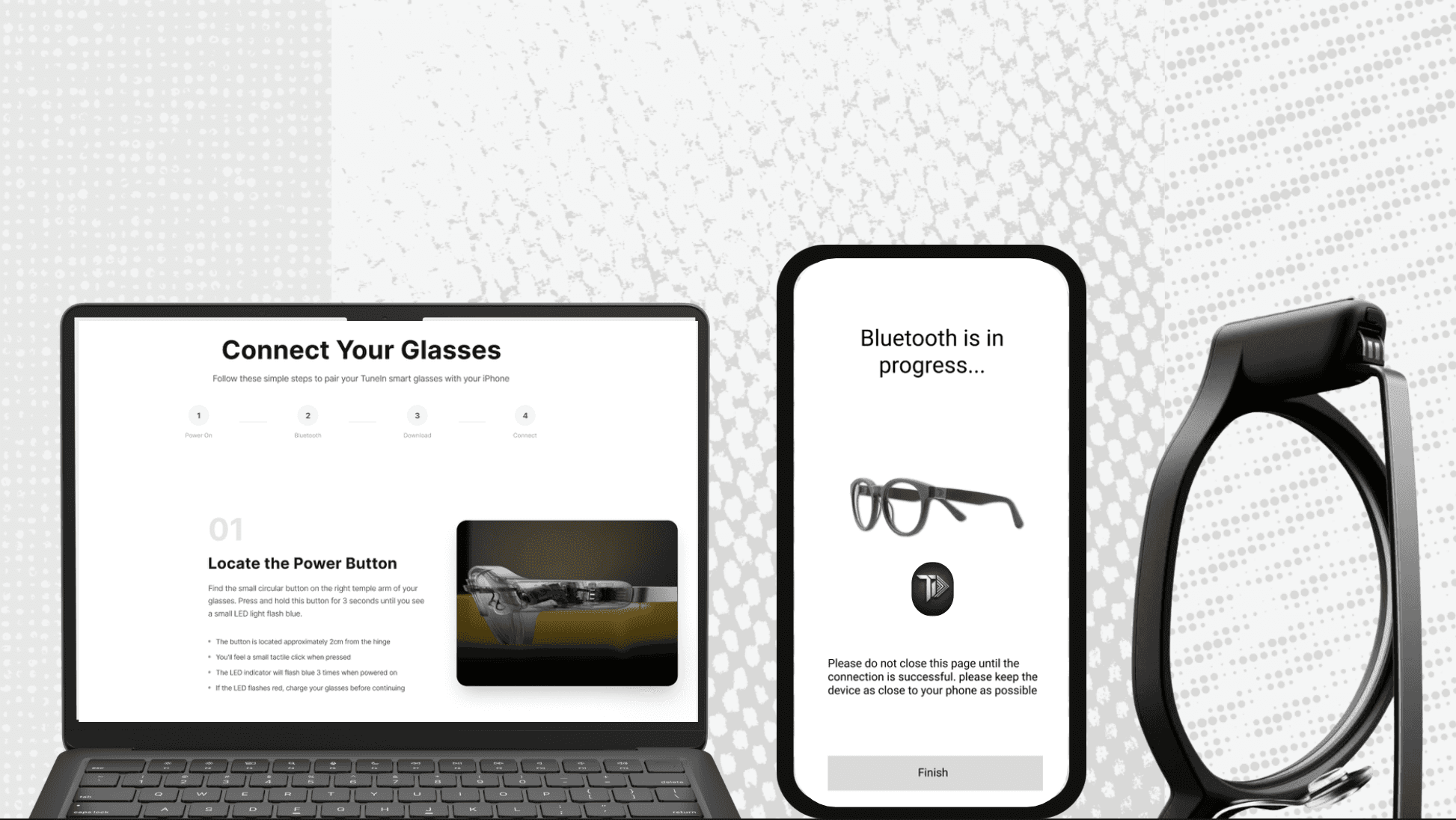
Easy connection with your glasses
Easy connection with your glasses
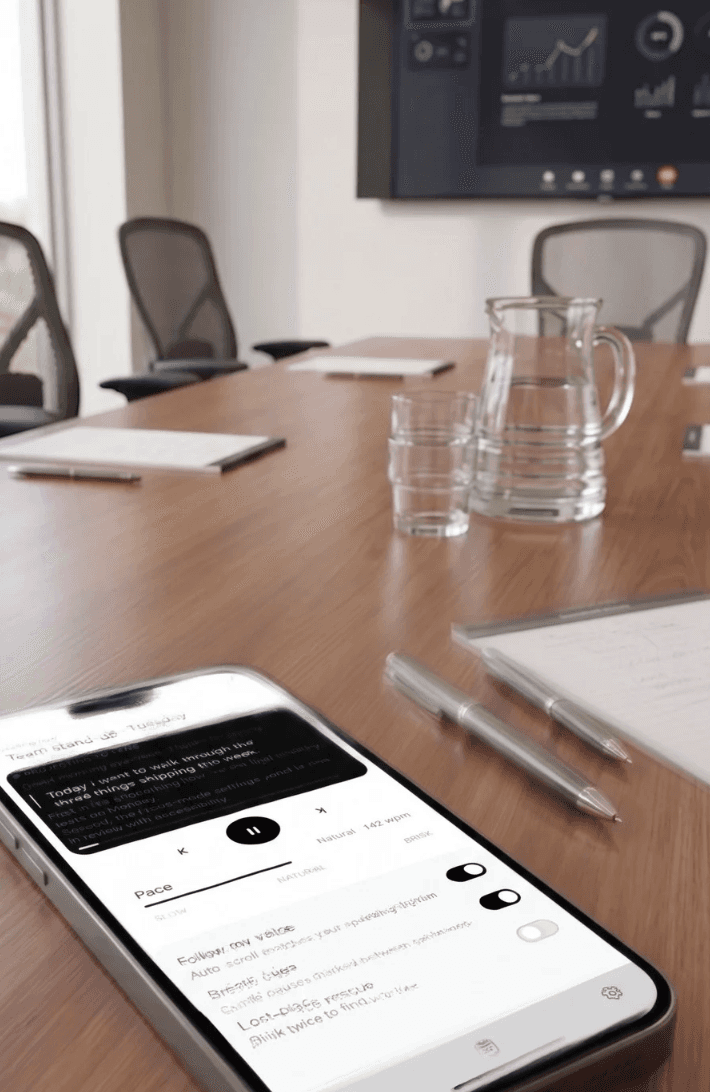
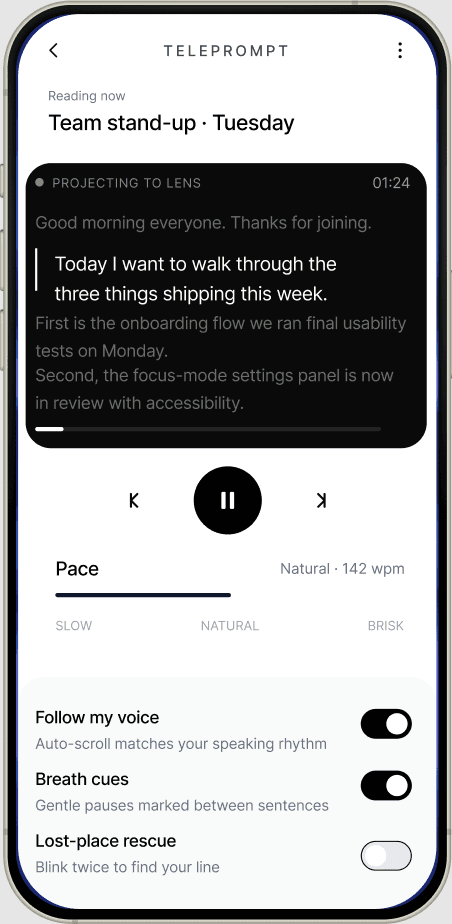
In my teleprompt, I wanted the experience to be as personalised as possible. During this redesign phase, I prioritised conversation transcription, not just summarisation.
I wanted it to stand out from other devices currently on the market, making it fully customised and tailored to the person wearing it. After a few uses, it learns your vocabulary and tone of voice, so it doesn’t feel overly artificial.
In the final section, I liked the idea that it could also be controlled through the glasses. For example, when you want to activate it, blink twice, and it turns on only with your consent.
TuneIn redefines UX beyond screens by introducing an AI system that actively shapes how users perceive their environment.
By filtering sensory input in real time, it transforms overwhelming spaces into manageable, focused experiences.

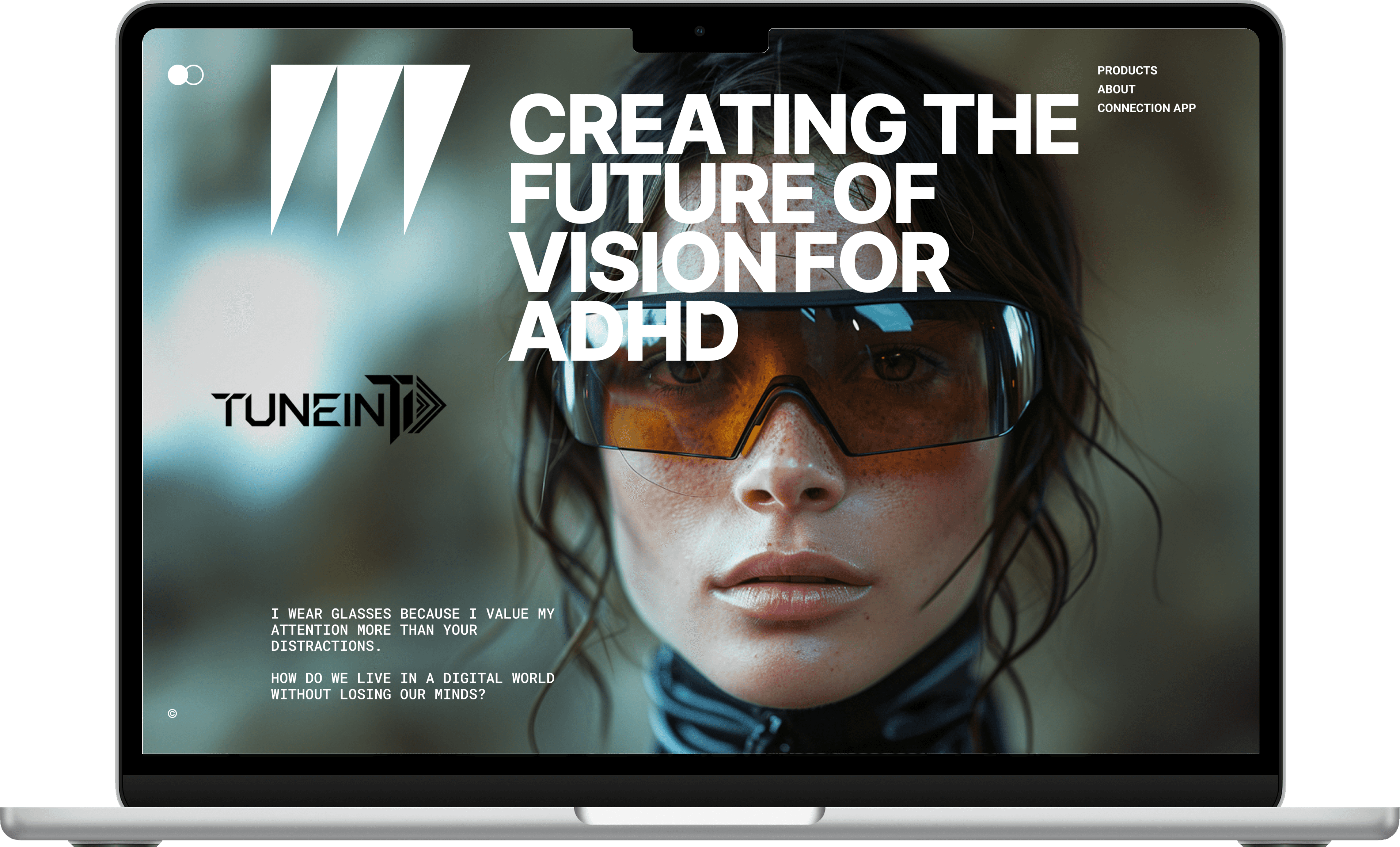
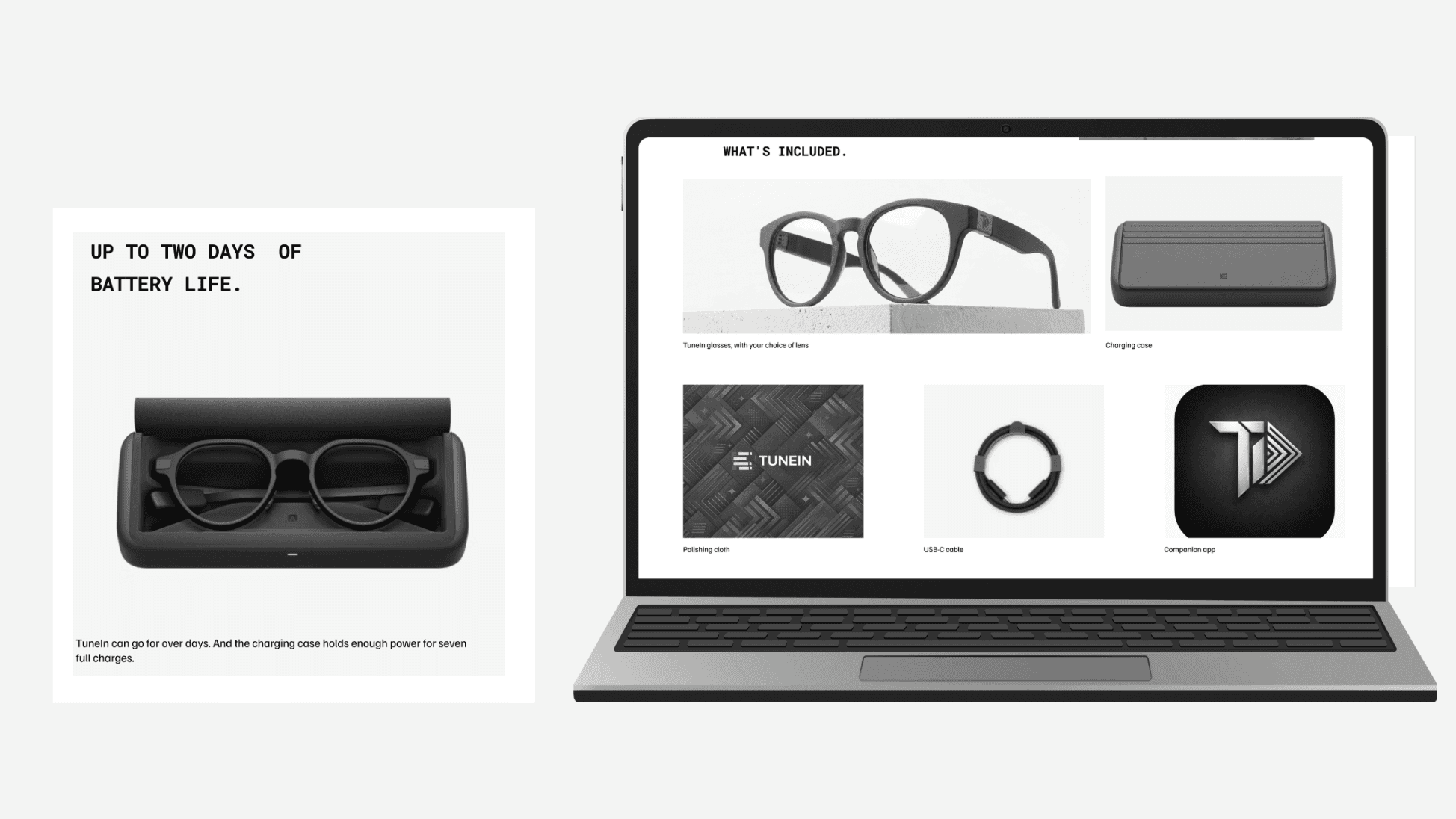
Tunein WEbsite concept

Design Impact
More than just smart glasses a complete sensory management system
Proactive, Not Reactive
Automated response system that acts before cognitive overload reaches crisis point, removing the burden of self-management.
Seamless Integration
Designed to look and feel like everyday glasses, supporting single vision and progressive prescriptions with premium optical features.
Neurodiversity-First
Built with input from the ADHD community and mental health professionals to address real-world challenges.
"TuneIn is committed to accessibility and neurodiversity inclusion. My products are designed with input from the ADHD community and mental health professionals. Not intended to replace professional medical advice or treatment."