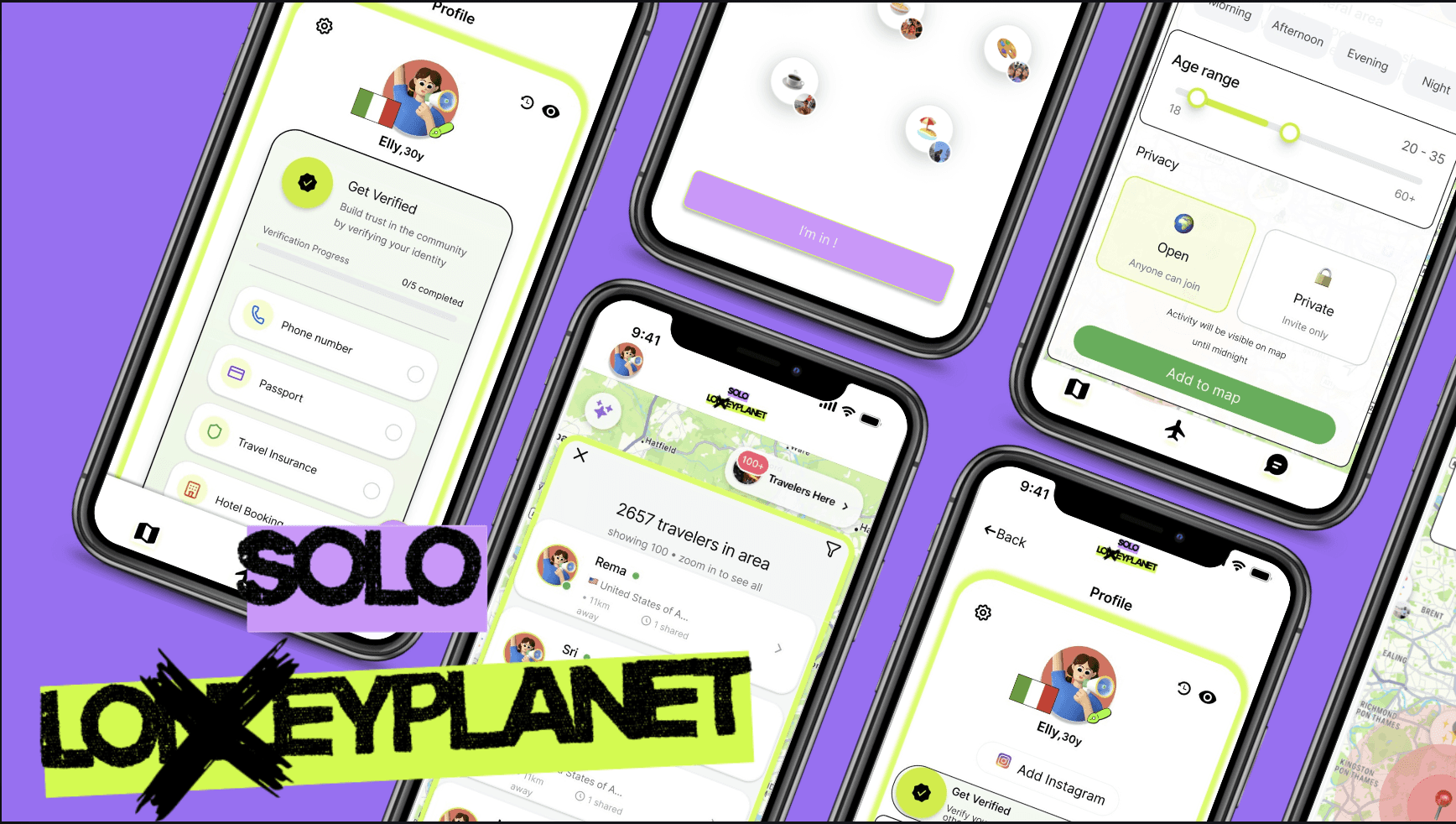
Transforming solo travel from lonely to connected
UX Case Study: Design Process Document
Project Overview
The Challenge
Solo travel is on the rise, with 64% of travellers exploring alone at least once per year. But there's a paradox: while they seek freedom and adventure, 68% feel lonely during their trips. The question became: How might we help solo travellers feel empowered and connected without sacrificing their independence?
The Vision
"Being solo doesn't equal being lonely. With the right tools and a community-driven platform, travellers can feel empowered, confident, and genuinely connected anywhere in the world."
Services
UX Design
UI Design
Information Design
Duration
12 Weeks
2025
My Thought Process
1
The Spark
I noticed a pattern in conversations with friends and travellers: the excitement of solo travel was often overshadowed by anxiety about safety and loneliness. This contradiction fascinated me.
2
The Realization
During research, I discovered that travellers use 3+ apps just to plan a single trip. They're overwhelmed by fragmented tools and lack genuine connection with other travellers.
3
The Direction
I decided to create a digital companion that doesn't just help plan trips, but transforms loneliness into meaningful connection through AI-powered personalization and community.
Key Insights That Shaped My Approach
Solo travellers want independence but crave authentic connections
Freedom vs.
Connection
Safety First
72% worry about safety and scams - trust is essential
AI Opportunity
55% are open to
AI-powered trip planning
Tool Fatigue
Users are tired of juggling multiple apps and platforms
Design Process
1
Discover
▸
User Research
▸
User Interviews
▸
Competitive Analysis
2
Define
▸
User Personas
▸
Empathy Map
▸
User Journey Map
3
Ideate
▸
User Flow
▸
Card Sorting
▸
Information
Architecture
4
Design
▸
Wireframes
▸
Hi-Fi Designs
▸
Prototype
User Research: Understanding Solo Travellers
📊
Online Survey
Distributed to travellers aged 20 to 35 to understand travel patterns and pain points
💬
User Interviews
15 in-depth interviews with students, digital nomads, and solo travellers
🔍
Competitive Analysis
Analyzed existing travel apps to identify gaps and opportunities
Key Research Findings
64%
Travel alone at least once per year
78%
Use 3+ apps to plan a trip
72%
Worry about safety or scams
68%
Feel lonely at least once during solo trip
80%
Want to meet people safely
55%
Open to AI planning trips
💡 The "Aha!" Moment
Why I focused on solo travel:
The strongest emotional pattern was the contrast between freedom and loneliness. That's when I realised the potential: a digital companion that could transform loneliness into connection. This wasn't just about planning trips—it was about reimagining the solo travel experience.
Competitor Analysis
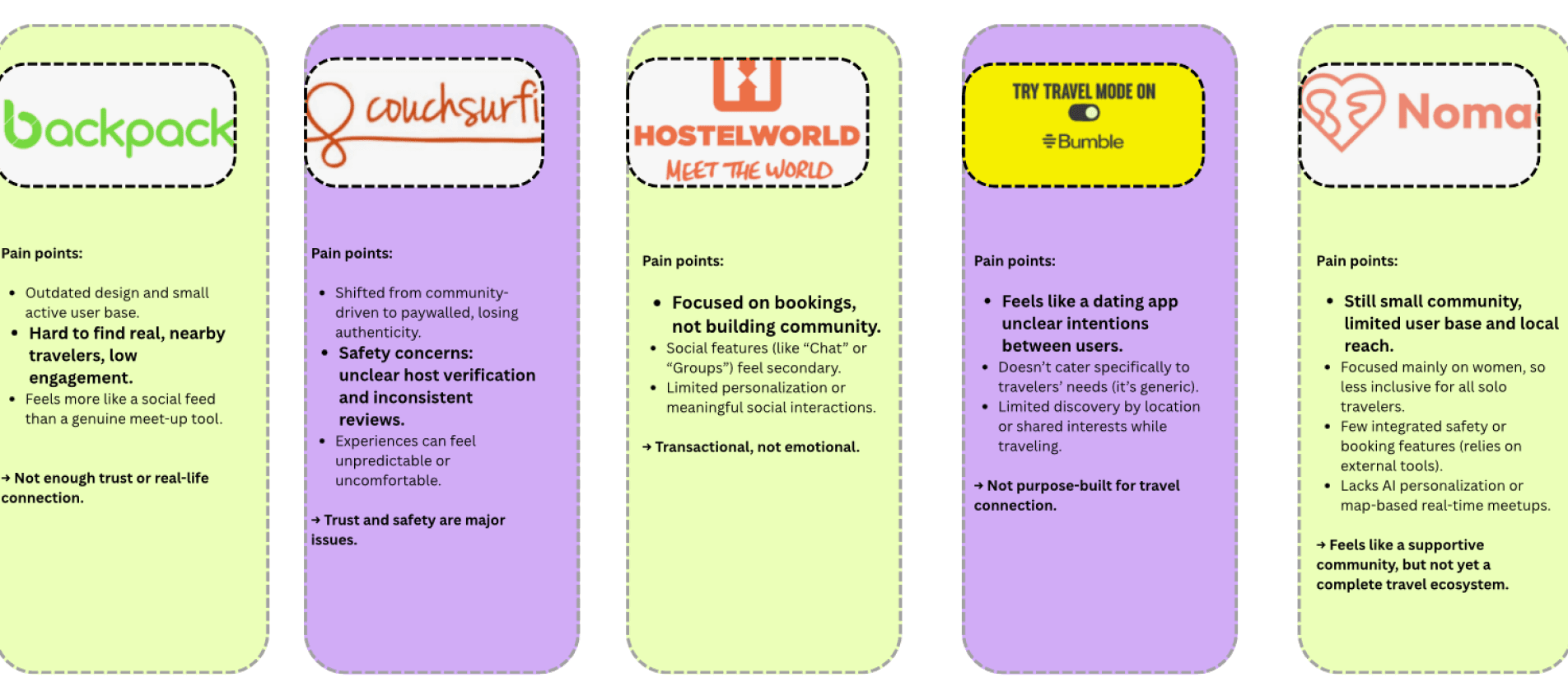
I analyzed leading travel and social platforms to understand what's working and where the gaps lie. This helped me identify unique opportunities for Solo Lonely Planet.
Market Gap Identified
Existing platforms either focus on trip planning OR social connection, but none seamlessly integrate both with AI-powered personalization and safety features specifically designed for solo travellers.
Competitive Advantage
By combining AI trip planning, verified community connections, real-time safety features, and emotional well-being tools, we create a holistic solution that addresses all aspects of solo travel.
Meet the Travellers
Through research, I identified three primary personas that represent our target users. Each has unique needs, goals, and pain points that shaped the product's features.

Maya, 24
The Social Butterfly
Goals: Meet locals, share experiences, find travel buddies
Pain Points: Safety concerns, fake profiles, loneliness
"I love traveling alone, but I wish there was an easy way to meet genuine people safely."

Emma, 28
The Adventurer
Goals: Spontaneous trips, authentic experiences, stay connected
Pain Points: Overwhelmed by apps, wants simplicity
"I don't want to juggle five different apps just to plan one trip."
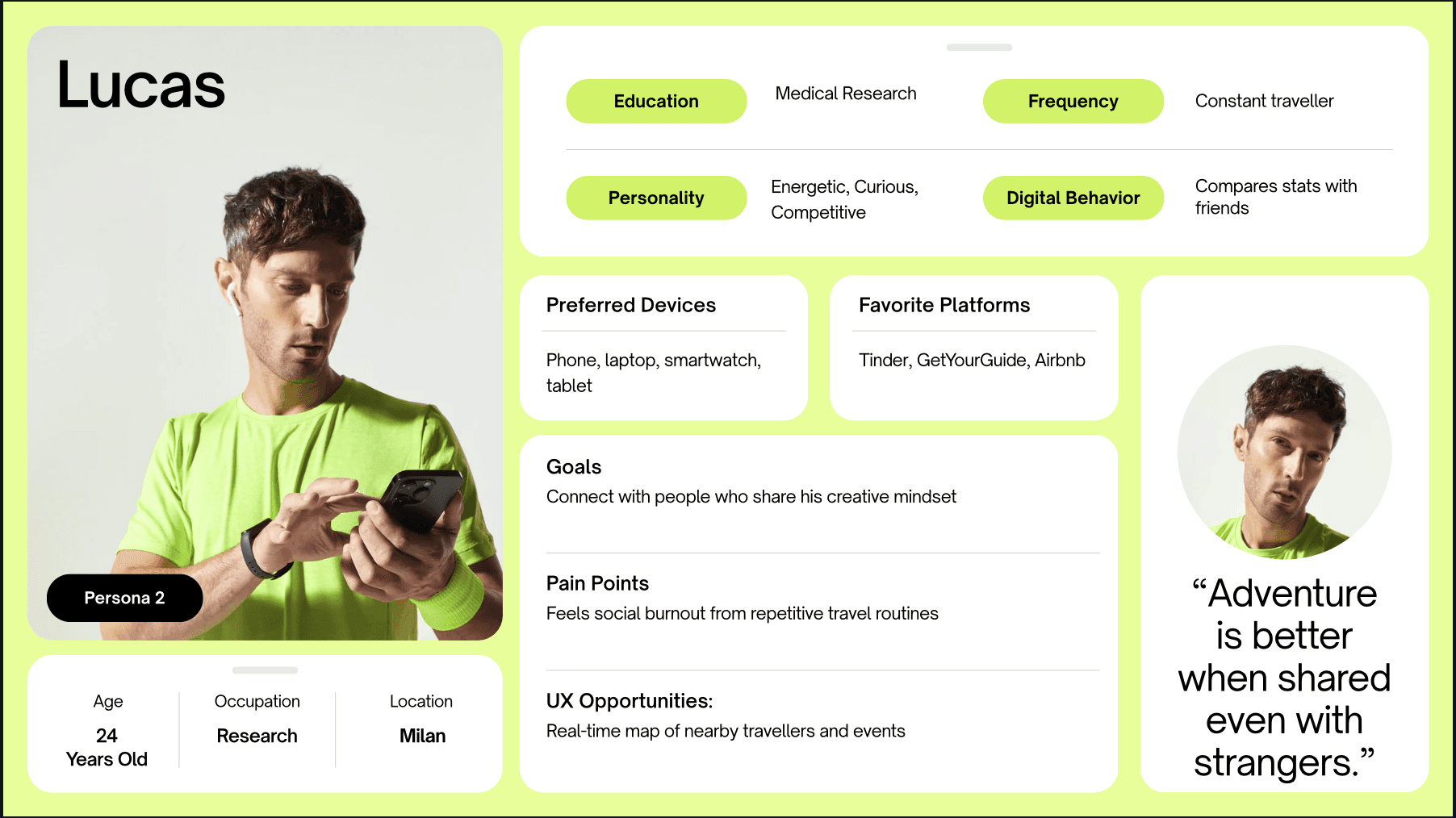
Lucas, 32
The Solo Explorer
Goals: Cultural immersion, safety, smart planning
Pain Points: Language barriers, scams, feeling isolated
"Adventure is better when you're prepared and connected—even with strangers."
The Solution: Lonely Planet Connect
An AI-powered app designed for solo travellers who want to plan smarter, travel safer, and connect more meaningfully. It merges AI trip planning, community connection, and emotional well-being tools—transforming solo journeys into shared experiences.
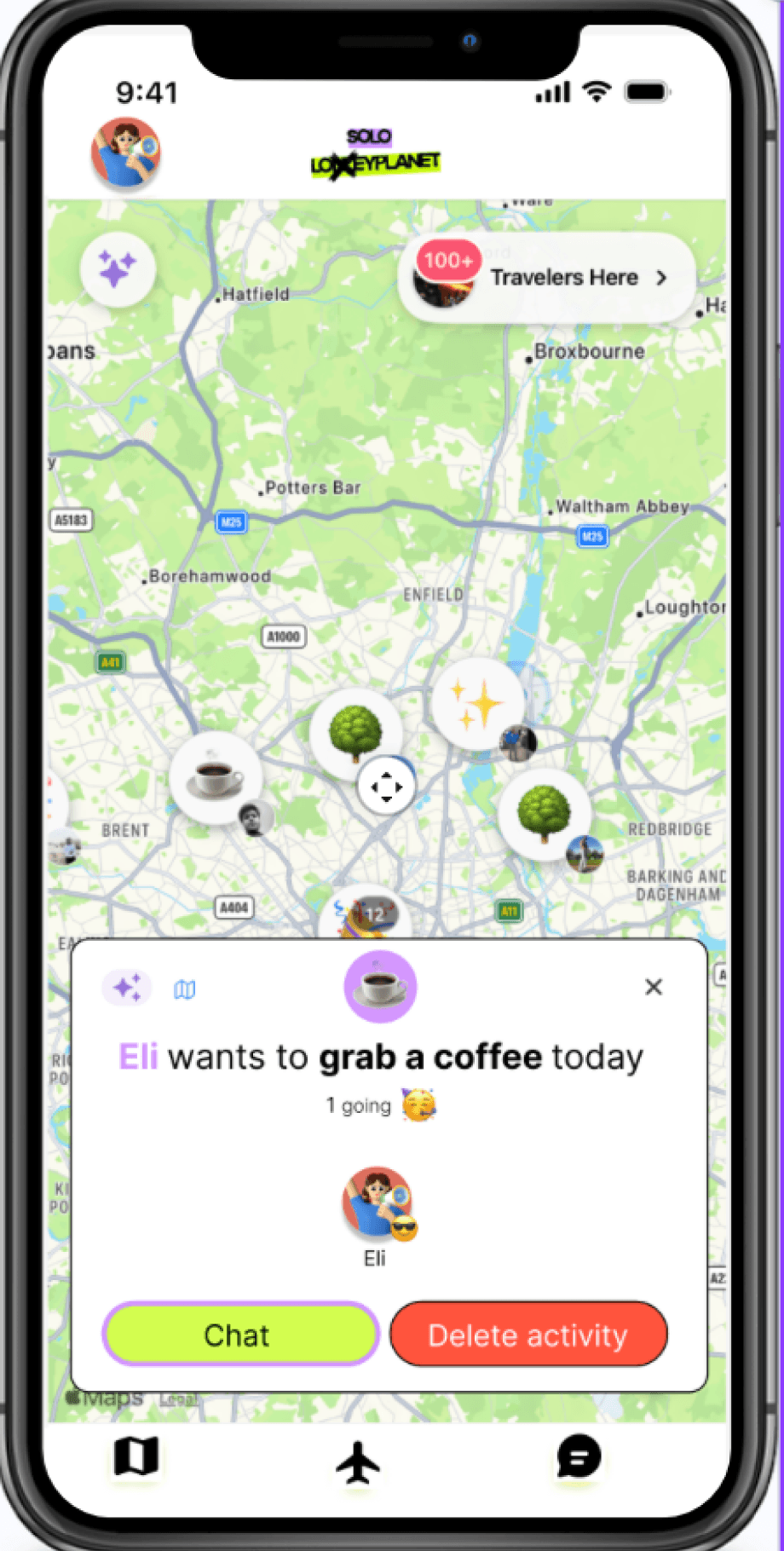
Smart Interactive Maps
AI-powered maps that adapt to travel preferences, highlighting safe routes, hidden gems, and real-time recommendations.

Personalized Experience Engine
Machine learning algorithms analyze user behavior and travel history to deliver tailored recommendations and insights.

Cultural Community Platform
Connect with verified travellers in real-time, share experiences, and build meaningful connections safely.
AI Becomes Your Digital Co-Pilot
✓
Answering questions in real time
✓
Translating languages instantly
✓
Recommending safe routes, cafés, and hidden gems
✓
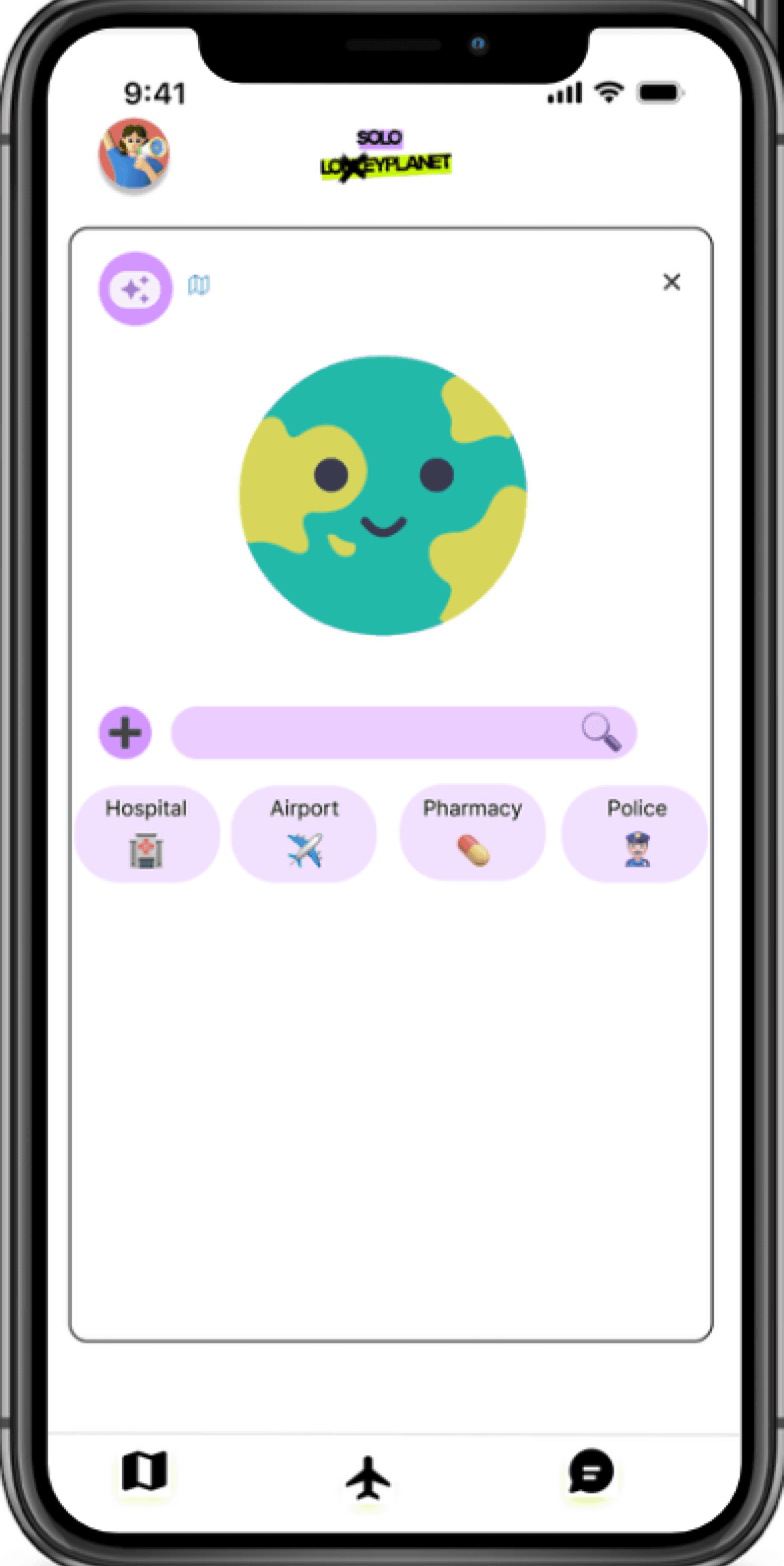
Highlighting emergencies like nearby hospitals or embassies

User Flow: From Discovery to Connection
I mapped out the complete user journey to ensure every touchpoint is intuitive and delightful. The flow prioritizes safety, personalization, and ease of connection.
1
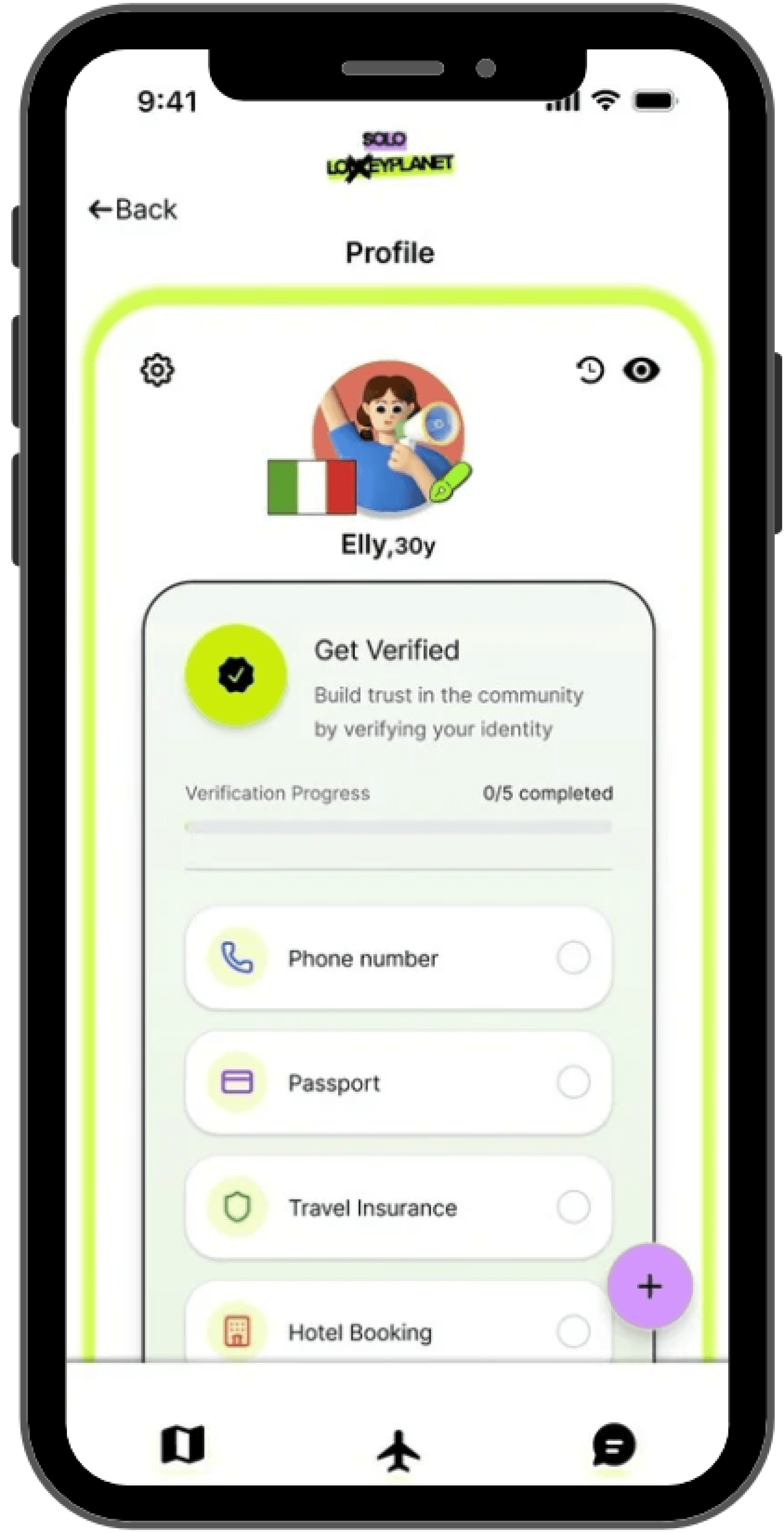
Onboarding & Verification
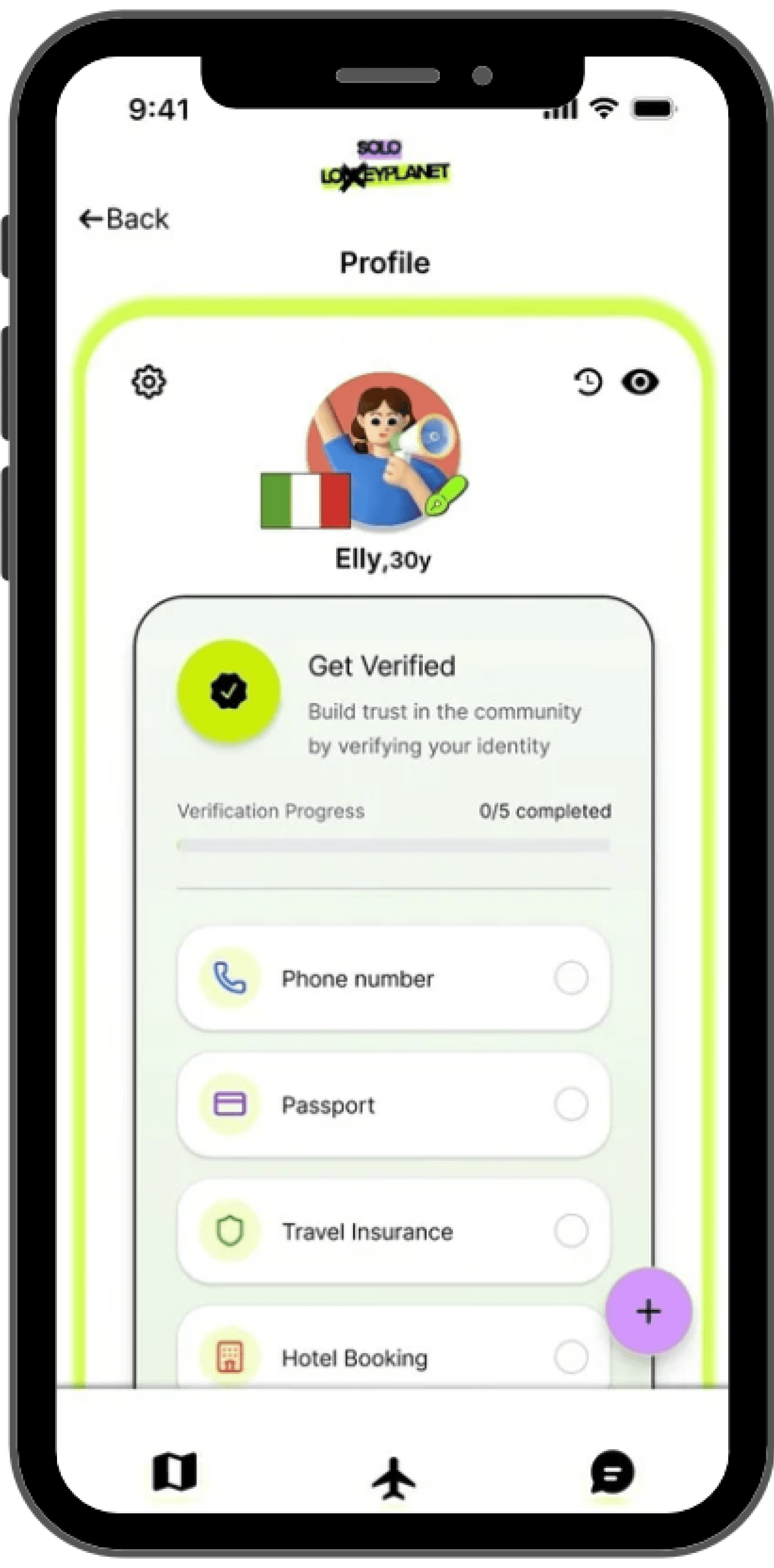
Users create profiles and get verified through multiple steps (phone, passport, social media) to build trust and ensure a safe community environment.

2
Discovery & Planning
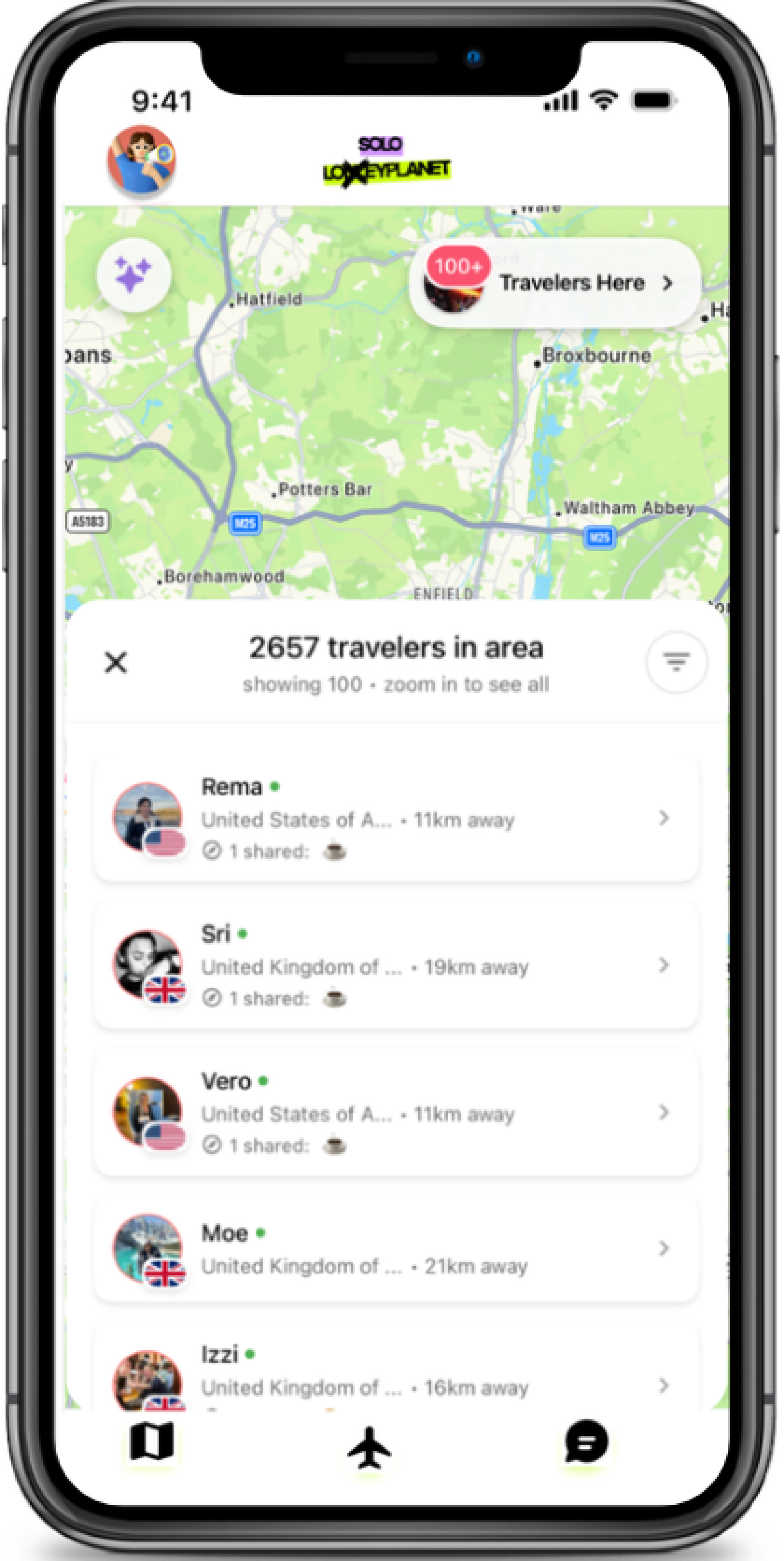
AI suggests personalized destinations, activities, and travel tips based on preferences. Users can explore interactive maps and see other travelers in their area.
3
Safe Connection
Users can connect with verified travelers through chat, join activities, or share their location. Safety features include real-time tracking and emergency contacts.


4
Live Experience
During the trip, the AI companion provides real-time assistance, translations, safety alerts, and personalized recommendations to enhance the travel experience.
Design Philosophy
Every step in the user flow is designed with safety-first principles and frictionless interaction. The goal is to make solo travel feel effortless and empowering, not overwhelming or isolating.
Strength: Building Trust & Safety
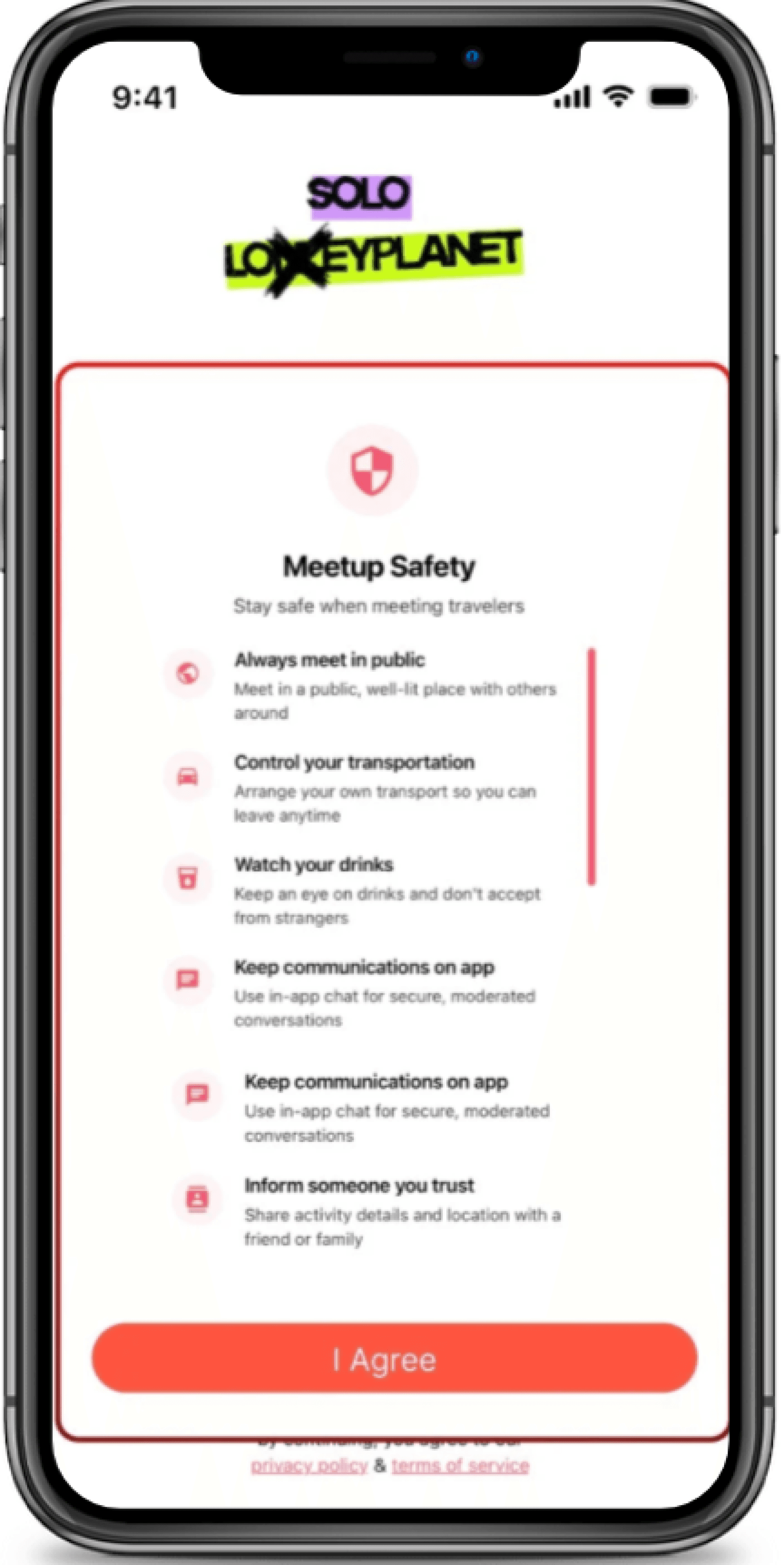
Our Safety Commitment
🛡️
Meeting new people is exciting, but we always prioritize safety
✓
Multi-step verification process ensures authentic profiles
🔒
We're committed to creating a positive and safe space for all members
Safe Instructions
•
Share with one friend your location
•
Don't go in any isolate place
•
Don't Drink


Tools & Platforms Used

Figma

Photoshop

Asana
🎨
Design Tools
Final Designs & Prototype
The culmination of research, iteration, and user testing resulted in a polished, intuitive interface that embodies the spirit of Solo Lonely Planet.
SOLO
LONELY PLANET
Transforming solo travel experiences
Reflections & Next Steps
What I Learned
1. Empathy is everything: Understanding the emotional journey of solo travellers—not just their functional needs—was crucial to creating a meaningful solution.
2. Safety builds trust: For a community-driven platform, robust verification and safety features aren't optional they're the foundation of the entire experience.
3. AI as a companion: AI should enhance human connection, not replace it. The technology works best when it empowers users to make better decisions and feel more confident.
Future Enhancements
→
AR features for real-time translation and navigation
→
Integration with wearables for health and safety monitoring
→
Gamification elements to encourage community engagement
→
Expanded mental health support and mindfulness features
Thank You for Reading!
This project represents my passion for creating meaningful digital experiences that solve real human problems.
Solo travel, but never alone 🌍